

DWDM: High-Capacity Optical Transport
High-Capacity Optical Transport
Flexible, Future-Proof Open Line Systems for DCI and Metro Networks Supporting IP-over-DWDM.
Engineering Efficiency: The DWDM Advantage
Modernize your mission-critical infrastructure with high-performance optical networking engineered for the rigorous demands of 5G, IoT, and enterprise Cloud services.
Key Business & Technical Benefits
What is DWDM:
Dense Wavelength Division Multiplexing (DWDM) is an advanced optical transport technology that enables multiple services to be carried simultaneously over a single pair of fiber. It allows enterprise organizations and service providers to expand capacity rapidly while drastically reducing total cost of ownership (TCO).
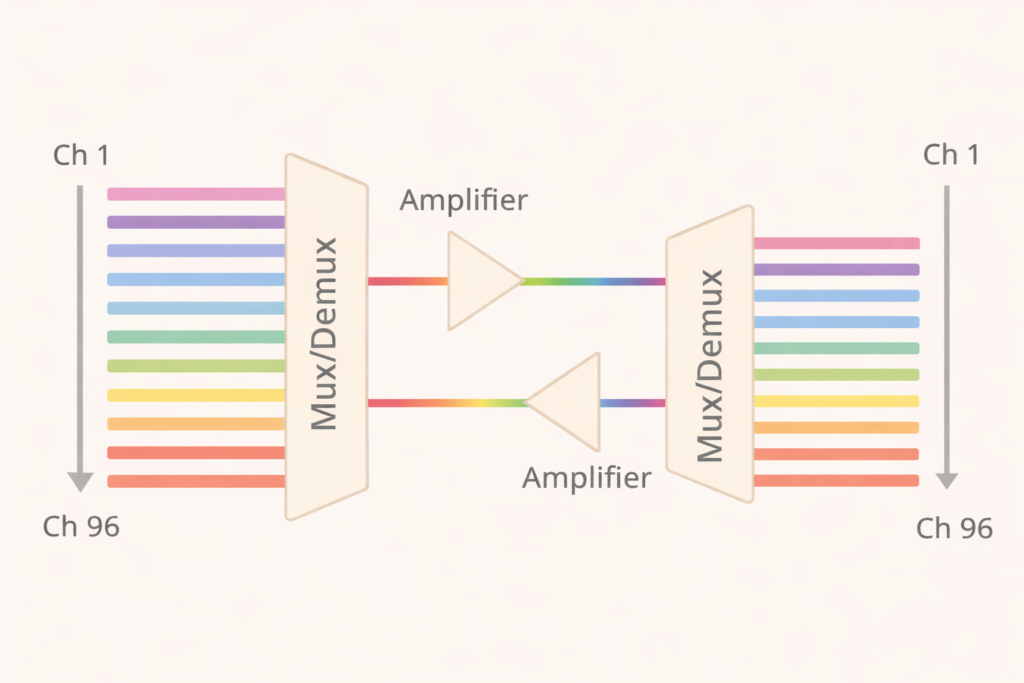
Technical Deep Dive: How DWDM Works
DWDM in the OSI Model
Dense Wavelength Division Multiplexing (DWDM) exponentially increases the data-carrying capacity of a single fiber pair. By multiplexing multiple independent data channels onto distinct light wavelengths (colors), DWDM enables simultaneous transmission of high-bandwidth services—including data, voice, and video—over long-haul distances with minimal signal degradation.
DWDM vs. CWDM
Cost-Efficient Fiber Leasing Approaches
QKD vs AES 256 GCM Encryption
Webscale Infrastructure Optimization
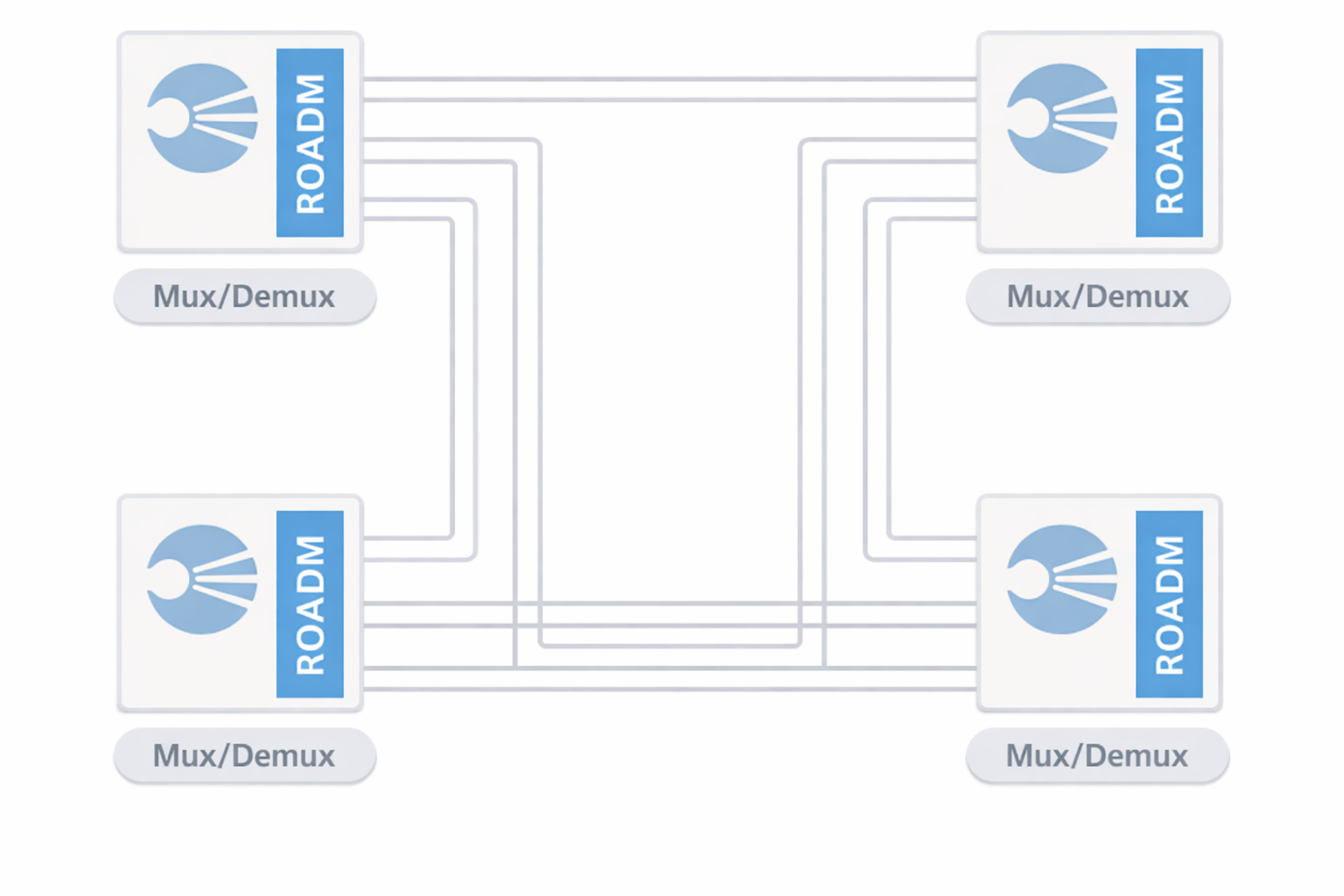
A ROADM network is a flexible optical transport architecture that enables remote, dynamic routing of individual wavelengths across a DWDM system—allowing operators to add, drop, or pass through channels without manual intervention, improving scalability and reducing operational complexity.
While CWDM (Coarse WDM) serves as an excellent entry-level solution for distances up to 70km, it is architecturally limited to 18 channels. GOIP’s enterprise DWDM solutions allow you to bypass these constraints completely.
By layering DWDM over CWDM, organizations can seamlessly expand capacity on existing links. This enables the addition of high-bandwidth channels without replacing or modifying your underlying fiber infrastructure—a highly strategic move for rapid TCO reduction.
By layering DWDM over CWDM, organizations can seamlessly expand capacity on existing links. This enables the addition of high-bandwidth channels without replacing or modifying your underlying fiber infrastructure—a highly strategic move for rapid TCO reduction.
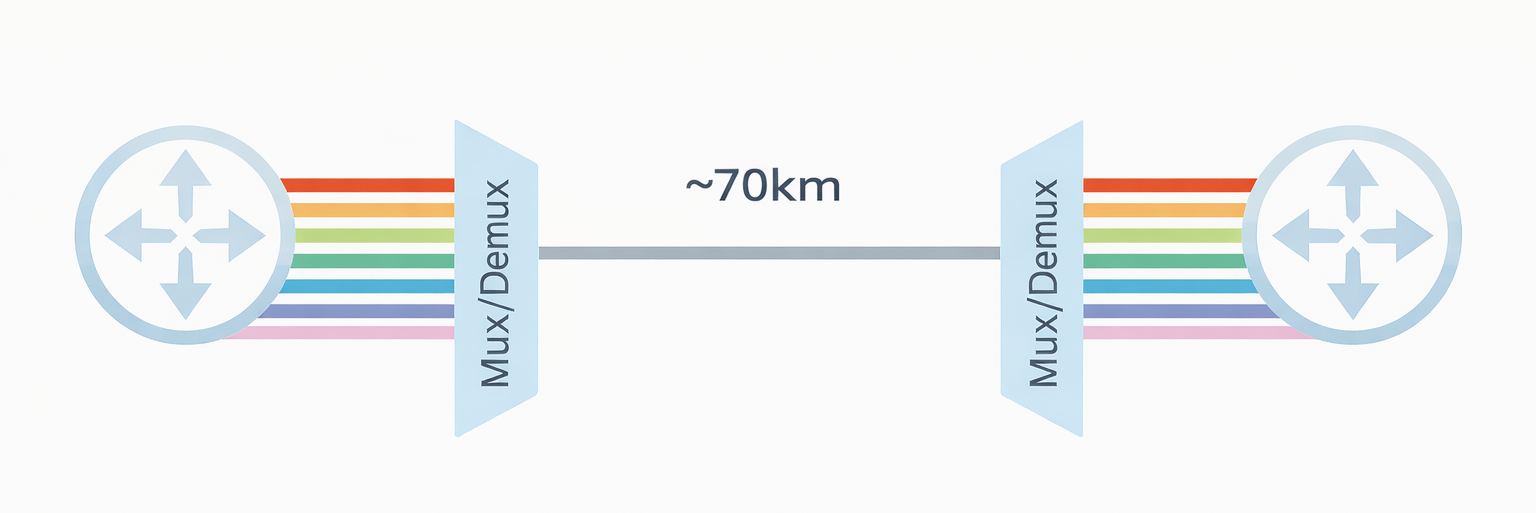
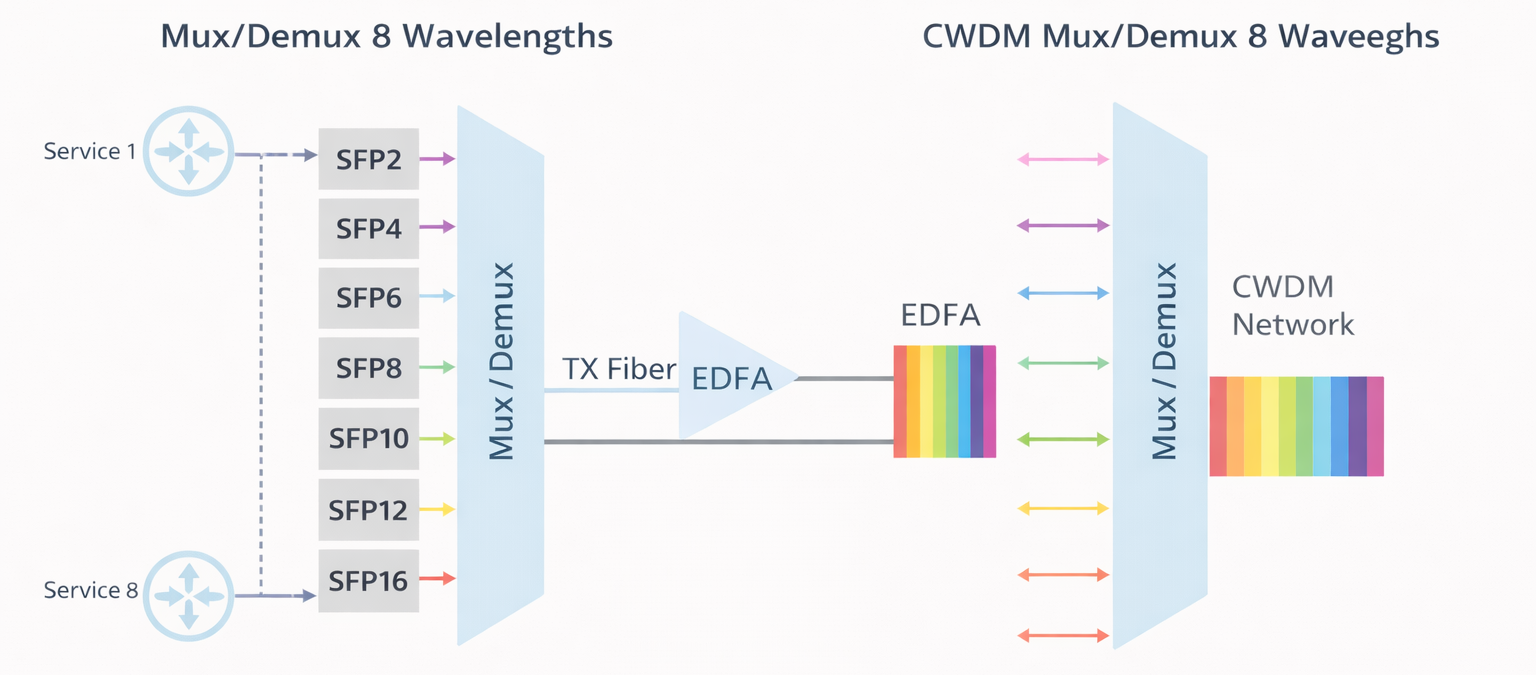
DWDM over CWDM enables service providers to expand the capacity of existing CWDM networks by adding higher‑bandwidth DWDM wavelengths without replacing or modifying the underlying fiber infrastructure
Single‑fiber DWDM solutions reduce fiber consumption by half, delivering significant economic benefits for carriers, dark‑fiber providers, and enterprises. In environments where fiber leasing costs are high, taxes apply to lit fiber, or fiber availability is limited, single‑fiber operation provides a highly efficient and cost‑effective alternative.
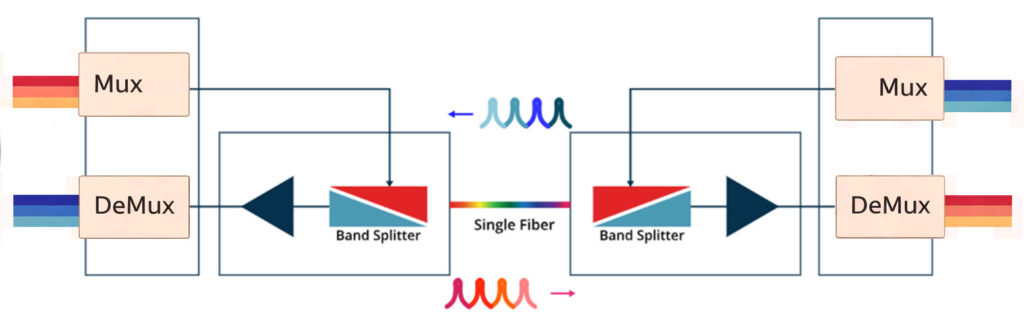
Fiber‑optic communication was once considered inherently secure and resistant to tapping. However, recent years have demonstrated that with readily available tools, it is now possible to intercept optical signals and extract data from fiber cables. This shift highlights the growing need for robust physical‑layer security measures to protect sensitive information traveling across optical networks.
Layer 1 Encryption

Layer‑1 security focuses on protecting data directly at the optical transport layer, where traffic travels over fiber.
This layer is often overlooked, yet it is one of the most vulnerable points in a network because fiber routes and physical access conditions are not always known or controlled.
Quantum Key Distribution (QKD) and AES‑256 encryption both aim to secure communications, but they do so in fundamentally different ways.
Purely Open Optical Networking:
Freedom, Flexibility, and Standards
Purely Open Optical Networking is our commitment to an optical ecosystem built on freedom, flexibility, and transparency. Instead of locking customers into proprietary hardware, restrictive licenses, or closed management systems, we deliver an architecture that is fully standards‑based and interoperable across vendors. This empowers operators to design, scale, and evolve their networks on their own terms.
Data Center Fabric
Fiber‑optic communication was once considered inherently secure and resistant to tapping. However, recent years have demonstrated that with readily available tools, it is now possible to intercept optical signals and extract data from fiber cables. This shift highlights the growing need for robust physical‑layer security measures to protect sensitive information traveling across optical networks.
Data Center Gateways: Enabling Seamless Cloud Connectivity
Data centers are the foundation of today’s digital economy. As organizations expand across regions and markets, their data centers no longer operate as standalone facilities.
They now function as part of a highly interconnected global ecosystem designed to support the increasing demands of customers and users.
This shift has made resilient, high‑performance network connectivity essential. Seamless communication and efficient data transfer between sites directly influence the performance, security, and availability of mission‑critical applications and services.
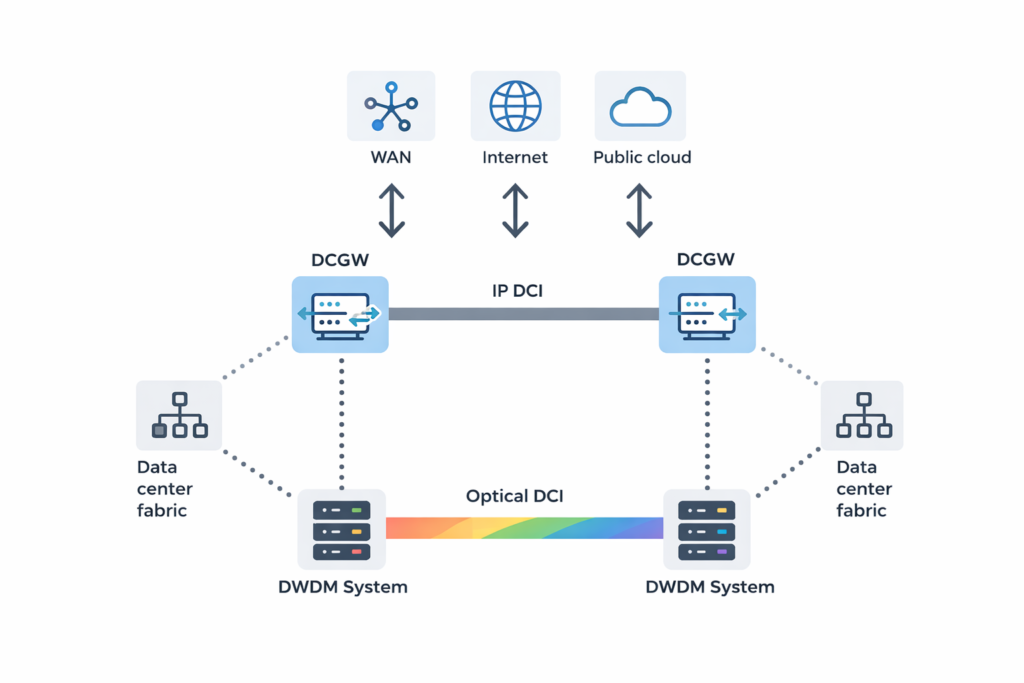
Data Center Gateways (DCGWs) have emerged as a key solution to these growing connectivity requirements. Acting as scalable and reliable entry and exit points for data traffic, DCGWs enable organizations to interconnect data center fabrics—spanning private clouds, public clouds, and hybrid environments—while preserving the integrity and availability of their applications and data.
As artificial intelligence (AI) becomes integral to business operations, the role of the DCGW becomes even more critical. AI workloads demand exceptional performance, massive scale, and uncompromising reliability. With widespread AI adoption, data center networks will be pushed to new limits, making robust, scalable connectivity a strategic necessity for organizations worldwide.
As artificial intelligence (AI) becomes integral to business operations, the role of the DCGW becomes even more critical. AI workloads demand exceptional performance, massive scale, and uncompromising reliability. With widespread AI adoption, data center networks will be pushed to new limits, making robust, scalable connectivity a strategic necessity for organizations worldwide.
Strategic Technology Partnerships
We proudly collaborate with global industry leaders such as Smartoptics, PacketLight Networks, and Nokia to engineer cutting-edge, resilient optical solutions. These partnerships guarantee immediate access to the latest technological innovations, enhancing connectivity and performance for our clients, resellers, system integrators, and distributors worldwide.



Why Do Enterprises Choose GOIP
Ready to Elevate Your Business with GOIP’s Managed Services?
Future-proof your organization with managed SD-WAN and infrastructure solutions that ruthlessly prioritize security, agility, and performance. Partner with GOIP to achieve guaranteed business continuity. Contact our enterprise experts today for a complimentary consultation.
Stay Ahead:
Secure Great News Updates from GOIP
Never miss a critical market shift. Sign up for our executive newsletter to receive curated expert insights, trending ICT news, and exclusive industry updates.


