Is Your IT Department Quietly Draining Your Profits?
Most growing Hong Kong enterprises don’t realize the hidden cost of scaling until it directly impacts their bottom line.
As your organization expands from 10 to 1,000 employees, your infrastructure becomes exponentially more complex. Without an enterprise-grade service framework, your IT operations fail to scale cleanly—leading to unpredictable overhead and operational drag.
4 Costly IT Drains Holding Your Enterprise Back
Constant Firefighting: Your team is trapped in a reactive loop—constantly resolving immediate crises rather than implementing proactive prevention.
Productivity Loss: System bottlenecks and unmonitored slowdowns erode daily employee output without actionable diagnostic data to fix them.
Black-Box Operations: Untracked requests, lost communications, and a lack of centralized accountability create severe operational blind spots.
Key-Person Dependency: Critical system knowledge lives with a few individuals, creating a single point of failure that jeopardizes overall business continuity.
Transform IT from a Cost Center into a Strategic Value Driver
GOIP ITSM unifies your hardware, servers, and network infrastructure into a single, actionable pane of glass. By replacing fragmented workflows with centralized management, we empower your business to eliminate waste, mitigate operational risks, and maintain peak performance.
Stop letting legacy IT management hold you back. Leverage intelligent ITSM to power your next phase of growth.
Why Standardized Cybersecurity Hygiene Isn’t Optional – It’s Survival Cyber threats evolve daily, yet 68% of breaches trace back to basic hygiene failures. For MSPs, fragmented security practices across clients are a liability waiting to explode. Standardizing cybersecurity hygiene isn’t just about protection — it’s about transforming your MSP into an unshakeable strategic partner. Let’s build your blueprint. The…
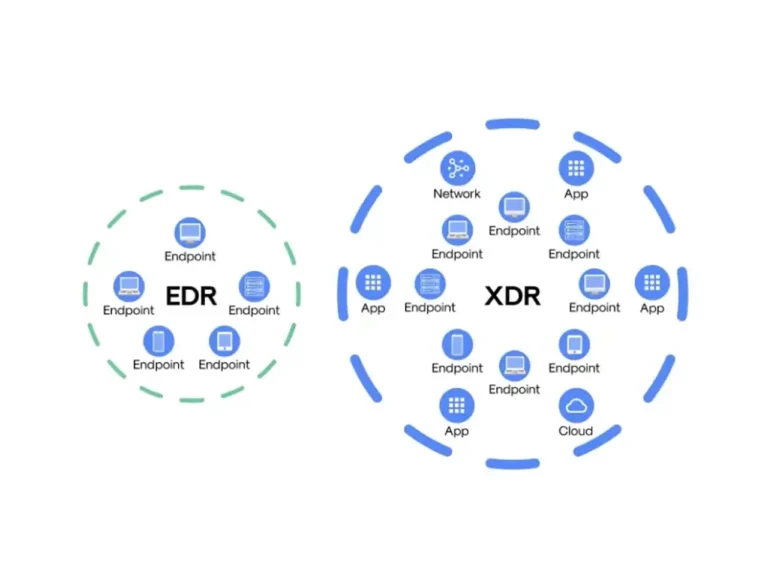
In today’s threat landscape, the EDR vs. XDR debate is a critical strategic decision for every organization. Endpoint Detection and Response (EDR) was once the gold standard, but sophisticated cyberattacks targeting cloud, identities, and supply chains have made it insufficient on its own.This guide will break down the key differences between EDR and Extended Detection and Response (XDR) to help you…
Dense Wavelength Division Multiplexing (DWDM). Time to ride the wavelengths? Today the networks that make up the public internet, including our own, enable more traffic than ever before to traverse the globe to its destination. The low latency, high bandwidth, and reliable Ethernet/MPLS based networks make it easy for companies to create the connections they…
Surveys reveal a significant trend: 69% of small and medium-sized businesses (SMBs) now purchase at least one IT service from a Managed Service Provider (MSP). But what exactly are managed IT services, and why are they becoming essential for modern businesses? This guide breaks down everything you need to know. What Are Managed IT Services? In simple terms, Managed IT…
Why OpenZR+ is the Ideal 400ZR Standard for Regional Networks The journey of 400ZR began with the OIF400ZR standard, designed for point-to-point links up to 120km. To address the broader needs of communication service providers, 400ZR+ emerged, extending range and supporting flexible client rates. OpenZR+ represents the next evolutionary step, combining the best of 400ZR+ and Open ROADM standards. …
What is a SOC and how can a Security Operations Center protect organisations from cyberattacks? In this article, you’ll get an introduction to how a Security Operations Center works – and what role their function plays in an organisation’s overall cyber protection. There is no such thing as 100 per cent cyber protection. That’s why…